

Peter Veale Explains the Importance of Looking at Lighting Beyond Vision
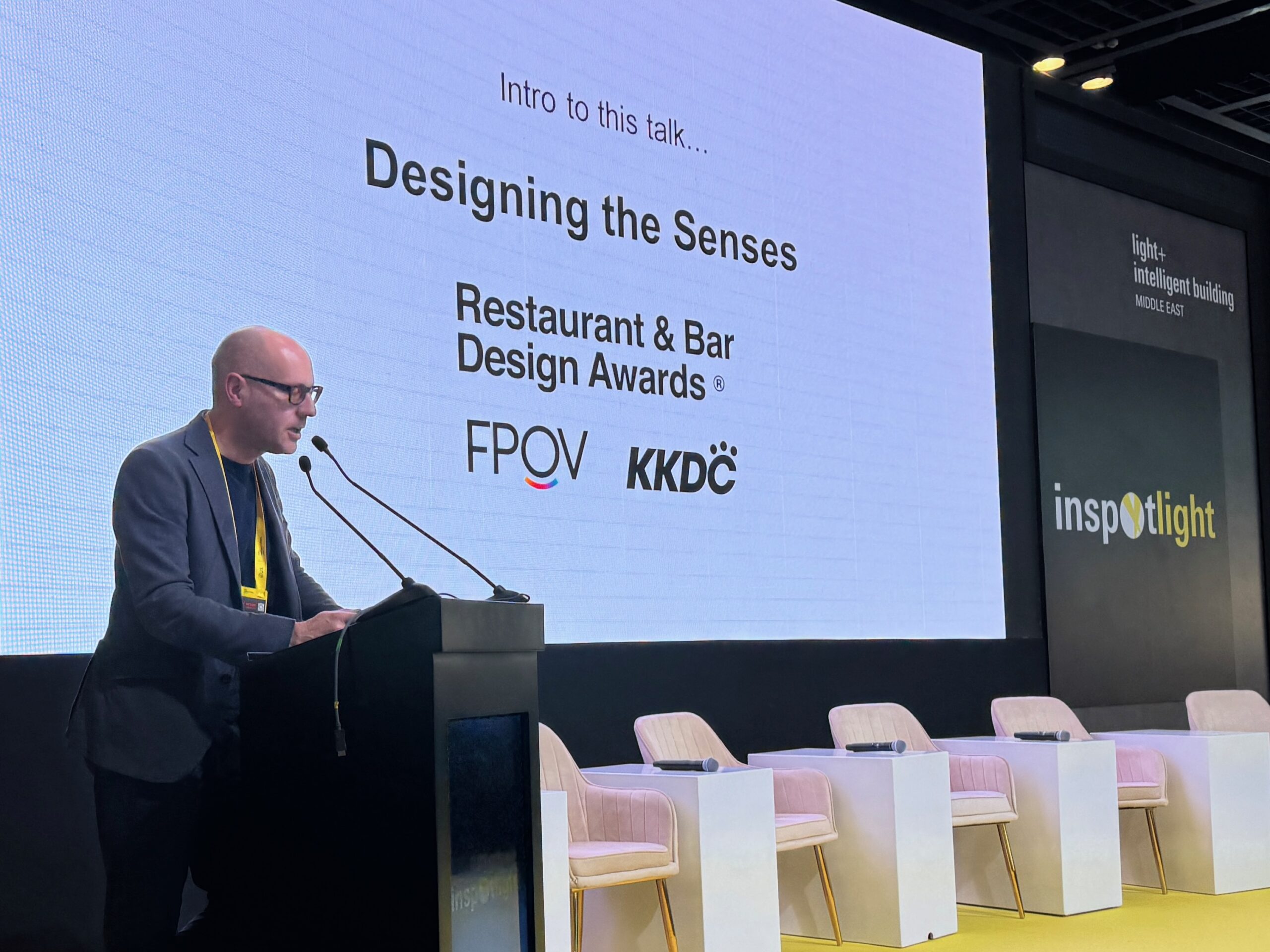
At Light + Intelligent Building Middle East, one of the most engaging sessions stepped away from fixtures and specifications. Instead, it focused on how lighting shapes human perception. I introduced Peter Veale, Director at Layers of Light. His presentation explored how light influences not only what we see, but also how we hear, taste, smell, and feel a space. From the start, Peter made one point clear. Light never works in isolation.
The McGurk Effect and Cross-Modal Perception
To ground the discussion, Peter demonstrated the McGurk Effect. It is a well-known perceptual illusion that shows how vision can override hearing. I strongly suggest you take two minutes to watch this video
In the example, a video plays a speaker repeatedly saying the sound “ba.” When viewers watch the speaker’s mouth forming a different sound, such as “fa,” many people swear they hear “fa.” The audio never changes. Only the image does. Close your eyes and the illusion disappears. Open them again and it returns. I strongly suggest you take two minutes to watch the below video, as it helps to make the point of the article.
The lesson is simple and powerful. What we see can change what we believe we hear. In architectural spaces, lighting that highlights faces, movement, or surfaces can subtly shape how sound is perceived. Vision leaks into other senses, often without us noticing.
A Manchester Restaurant Case Study
Peter then connected perception to profitability through a Thai restaurant in Manchester that he designed more than 15 years ago. The venue operates on two levels. The ground floor serves affordable food. The upper level functions as a bar-lounge, where margins on alcohol are much higher. The owner initially resisted dimming the lights in the restaurant. He worried that lower light levels would hurt efficiency. Peter eventually persuaded him to introduce gentle dimming scenes. The change was subtle, not theatrical.
The results were behavioral. The brighter lower level supported quick dining and table turnover. The dimmer upper level reduced self-awareness and encouraged guests to linger. People stayed longer, drank more, and spent more. The lighting matched the business strategy and profitability improved by only changing the lighting. Today, the restaurant is still operating, making it one of only a few in Peter’s career to last more than a decade.
Light Beyond Vision Shapes Taste and Texture
From there, Peter expanded into sensory research. Red light increases the perception of sweetness. Blue light suppresses appetite. Warm white light intensifies flavors overall. Bright rooms raise self-awareness and shorten dining time. Darker rooms do the opposite.
He also showed how grazing light reveals texture. A flat wall can appear rich and tactile with the right angle of light. Hospitality projects in Abu Dhabi and Marrakech illustrated how texture, revealed through lighting, adds drama without changing architecture.
Sound, Smell, and Emotional Memory
Lighting also affects how sound feels. Dim environments soften audio and reduce fatigue. This explains why cinemas lower lights beyond visual needs.
Smell completed the sensory picture. Peter explained that smell bypasses the brain’s thalamus and connects directly to emotion and memory. That is why scent can transport us instantly to another place. Lighting conditions can enhance or suppress these associations.
Peter’s message resonated because it was practical. Lighting designers already influence behavior, mood, and spending. They just do not always name it.
By understanding cross-modal perception—and effects like the McGurk illusion—designers gain a deeper set of tools. Light is not only about visibility. It is about experience. And when used with intent, it can support both better spaces and stronger business outcomes.