



A Conversation with Signify’s New CEO As Tempelman
When I sat down with Signify’s As Tempelman at Light + Building, the first thing I wanted to know was simple: what has he learned in his first six months running the largest lighting company in the world and what are his plans?
Tempelman didn’t hesitate.
“I’m new to the industry, but it’s a fascinating one,” he said. “When you come into a role like this, you have to deal with the immediate issues and at the same time build the future of the company.” He then walked through how he sees the lighting industry evolving.
“In my mind the market moves from conventional lighting, to LED lamps, to integrated luminaires,” Tempelman explained. “Then those luminaires become connected. And once they’re connected and you start capturing data, you move toward intelligent systems.”
That transformation, he said, changes the competitive landscape dramatically. “In the past we mainly competed with companies like OSRAM and GE,” he told me. “Now there are about 15,000 LED suppliers in China alone.” That number gets your attention. And it explains why Tempelman believes companies have to be much more deliberate about where they focus.
“As the market evolves you have to be clear about where you want to play and where you want to win,” he said.
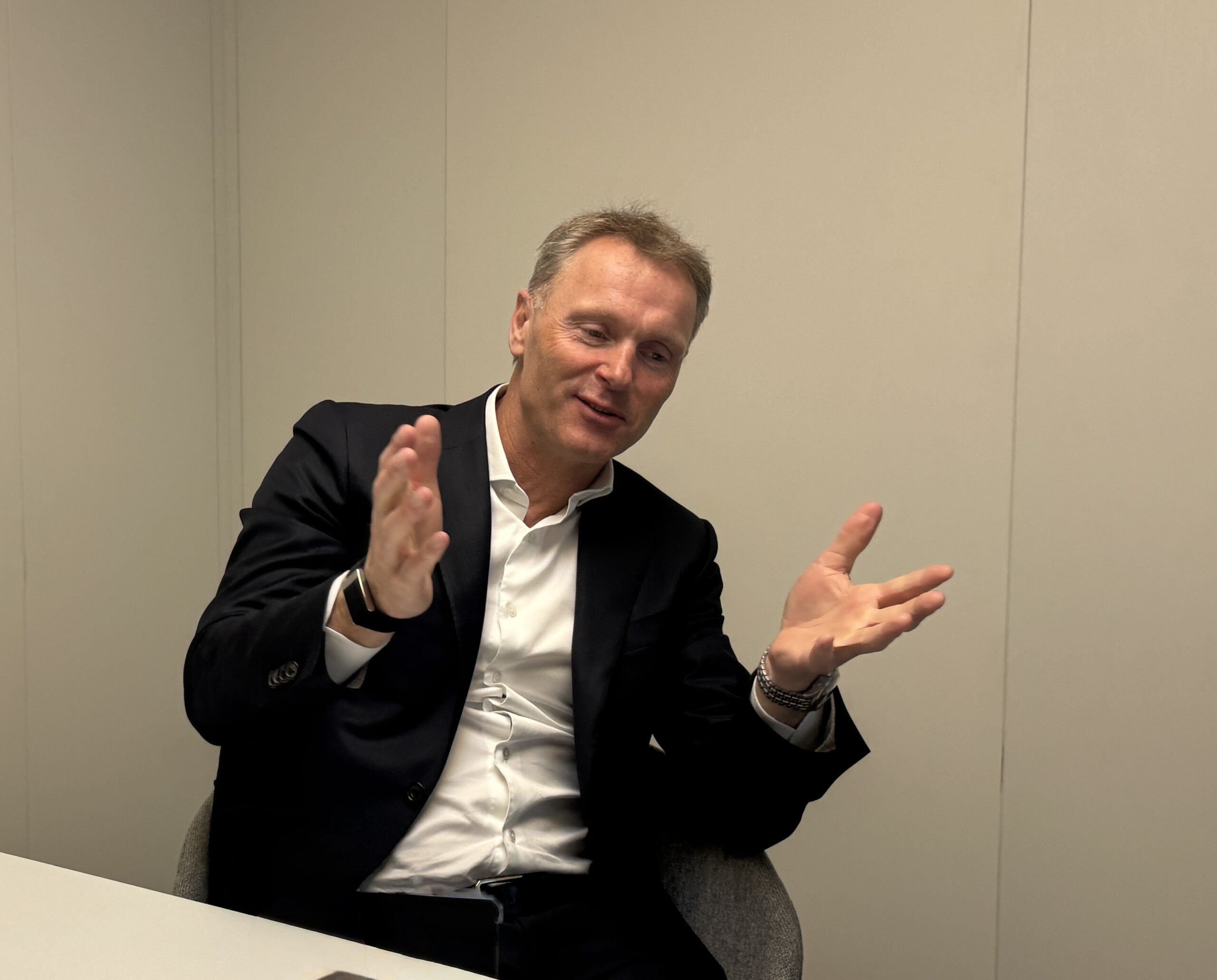
As Tempelman Speaks Passionately about the Specification Community
Refocusing on the Specification Market
I turned the discussion toward the specification community.
Readers of designing lighting (dl) magazine know that while Signify brands like Color Kinetics show up regularly in architectural projects, the company’s broader portfolio isn’t always as visible in the spec world.
So I asked him directly. Would Signify invest more in the specification market?
“Absolutely” Tempelman replied, before expanding on the idea. “We need to re-engage with the ecosystem—specifiers, distributors, system integrators, agents. That’s the part of the market where relationships matter.” That includes lighting designers, architects, and consultants who often determine which technologies ultimately appear in buildings.
Bringing Designers to Light + Building
Tempelman offered an example of how Signify is already starting to do that.
“We brought about 25 specifiers to Light + Building,” he said. “Our agents worked with us on that, and they helped support bringing them here.” That kind of investment sends a signal. (On Wednesday, your humble editor texted with a designer I had seen earlier in the week at the show, and she was in Eindhoven.)
I believe that trade shows like Light + Building are critical because they create opportunities for direct conversation between manufacturers and designers. Tempelman seems to genuinely enjoy those interactions. A few hours after my interview, I saw him in Hall 4.1 talking with partners and customers rather than hiding in meeting rooms.

As Tempelman at the Signiy Stand at LIght + Building where he met with several members of the media
Making Signify Easier to Do Business With
Another topic I raised was how the company plans to strengthen its relationships with agents and distributors. Tempelman didn’t dodge the question.
“You have to enable your agents to be successful,” he said. “Give them the right offer, the right commissions, the right terms—but also make it easier to do business.”
Ease of doing business, he emphasized, is critical. “That’s the key thing,” he said.
Signify is already investing in systems and infrastructure that should simplify how partners work with the company. Some of that effort will involve better communication and training. Some of it will involve making sure partners have the right tools to sell connected lighting systems.
Thinking Market-Backwards
As the conversation shifted toward technology, Tempelman made an interesting observation about how innovation should happen inside a company.
Historically, he said, Signify—like many technology companies—often started with the product. Engineers created something impressive, and then the company tried to figure out how to sell it. Tempelman believes the process should start somewhere else.
“We need to think much more market-backwards and product-forwards,” he told me. In other words, start with the problem customers are trying to solve. Then build the technology that addresses it.
We discussed Li-Fi, a product that I was passionate about a few years ago and he explained, “If you can’t sell people on the use case,” he said, “then it becomes very difficult.”
The Data Opportunity
Tempelman also believes lighting is moving toward a future where software and data become as important as hardware.Signify already operates roughly 170 million connected light points through platforms like Interact. “That’s a lot of data,” he said.
The challenge now is figuring out how to turn that data into something customers value. “We capture a lot of information,” Tempelman explained. “The question is what use cases customers are willing to pay for.”
His experience in the energy sector shapes that perspective.
Utilities increasingly rely on software and analytics to manage complex energy systems. Tempelman believes lighting systems could evolve in a similar direction. “We will move from being only a hardware company to becoming much more of a software company,” he said.
What Success Looks Like
Toward the end of our conversation I asked Tempelman a simple question. Three years from now, what will success look like for Signify?
His answer returned to the theme of partnerships. “I want specifiers and architects to see Signify as their first call,” he said.
He also emphasized the importance of helping partners grow. “If our distributors and agents succeed and grow their business,” he said, “then we will grow with them.” That philosophy—focusing on partner success and stronger relationships—was the message Tempelman repeated several times during our discussion.
And if you watched how he spent his time on the show floor, it’s clear he intends to follow through on it.
Tempelman has a tough job ahead–maybe the toughest in our industry. After spending some time with him, and hearing from his employees and agents, I think he is the right person for Signify at this time.
Go Deeper: Signify Press Conference at Light + Building Highlights Connected Lighting Opportunity
A Conversation with Signify’s New CEO As Tempelman
When I sat down with Signify’s As Tempelman at Light + Building, the first thing I wanted to know was simple: what has he learned in his first six months running the largest lighting company in the world and what are his plans?
Tempelman didn’t hesitate.
“I’m new to the industry, but it’s a fascinating one,” he said. “When you come into a role like this, you have to deal with the immediate issues and at the same time build the future of the company.” He then walked through how he sees the lighting industry evolving.
“In my mind the market moves from conventional lighting, to LED lamps, to integrated luminaires,” Tempelman explained. “Then those luminaires become connected. And once they’re connected and you start capturing data, you move toward intelligent systems.”
That transformation, he said, changes the competitive landscape dramatically. “In the past we mainly competed with companies like OSRAM and GE,” he told me. “Now there are about 15,000 LED suppliers in China alone.” That number gets your attention. And it explains why Tempelman believes companies have to be much more deliberate about where they focus.
“As the market evolves you have to be clear about where you want to play and where you want to win,” he said.
As Tempelman Speaks Passionately about the Specification Community
Refocusing on the Specification Market
I turned the discussion toward the specification community.
Readers of designing lighting (dl) magazine know that while Signify brands like Color Kinetics show up regularly in architectural projects, the company’s broader portfolio isn’t always as visible in the spec world.
So I asked him directly. Would Signify invest more in the specification market?
“Absolutely” Tempelman replied, before expanding on the idea. “We need to re-engage with the ecosystem—specifiers, distributors, system integrators, agents. That’s the part of the market where relationships matter.” That includes lighting designers, architects, and consultants who often determine which technologies ultimately appear in buildings.
Bringing Designers to Light + Building
Tempelman offered an example of how Signify is already starting to do that.
“We brought about 25 specifiers to Light + Building,” he said. “Our agents worked with us on that, and they helped support bringing them here.” That kind of investment sends a signal. (On Wednesday, your humble editor texted with a designer I had seen earlier in the week at the show, and she was in Eindhoven.)
I believe that trade shows like Light + Building are critical because they create opportunities for direct conversation between manufacturers and designers. Tempelman seems to genuinely enjoy those interactions. A few hours after my interview, I saw him in Hall 4.1 talking with partners and customers rather than hiding in meeting rooms.
As Tempelman at the Signiy Stand at LIght + Building where he met with several members of the media
Making Signify Easier to Do Business With
Another topic I raised was how the company plans to strengthen its relationships with agents and distributors. Tempelman didn’t dodge the question.
“You have to enable your agents to be successful,” he said. “Give them the right offer, the right commissions, the right terms—but also make it easier to do business.”
Ease of doing business, he emphasized, is critical. “That’s the key thing,” he said.
Signify is already investing in systems and infrastructure that should simplify how partners work with the company. Some of that effort will involve better communication and training. Some of it will involve making sure partners have the right tools to sell connected lighting systems.
Thinking Market-Backwards
As the conversation shifted toward technology, Tempelman made an interesting observation about how innovation should happen inside a company.
Historically, he said, Signify—like many technology companies—often started with the product. Engineers created something impressive, and then the company tried to figure out how to sell it. Tempelman believes the process should start somewhere else.
“We need to think much more market-backwards and product-forwards,” he told me. In other words, start with the problem customers are trying to solve. Then build the technology that addresses it.
We discussed Li-Fi, a product that I was passionate about a few years ago and he explained, “If you can’t sell people on the use case,” he said, “then it becomes very difficult.”
The Data Opportunity
Tempelman also believes lighting is moving toward a future where software and data become as important as hardware.Signify already operates roughly 170 million connected light points through platforms like Interact. “That’s a lot of data,” he said.
The challenge now is figuring out how to turn that data into something customers value. “We capture a lot of information,” Tempelman explained. “The question is what use cases customers are willing to pay for.”
His experience in the energy sector shapes that perspective.
Utilities increasingly rely on software and analytics to manage complex energy systems. Tempelman believes lighting systems could evolve in a similar direction. “We will move from being only a hardware company to becoming much more of a software company,” he said.
What Success Looks Like
Toward the end of our conversation I asked Tempelman a simple question. Three years from now, what will success look like for Signify?
His answer returned to the theme of partnerships. “I want specifiers and architects to see Signify as their first call,” he said.
He also emphasized the importance of helping partners grow. “If our distributors and agents succeed and grow their business,” he said, “then we will grow with them.” That philosophy—focusing on partner success and stronger relationships—was the message Tempelman repeated several times during our discussion.
And if you watched how he spent his time on the show floor, it’s clear he intends to follow through on it.
Tempelman has a tough job ahead–maybe the toughest in our industry. After spending some time with him, and hearing from his employees and agents, I think he is the right person for Signify at this time.
Go Deeper: Signify Press Conference at Light + Building Highlights Connected Lighting Opportunity