



Rethinking Lighting Fees: Lessons in Value from the Business of Light Workshop
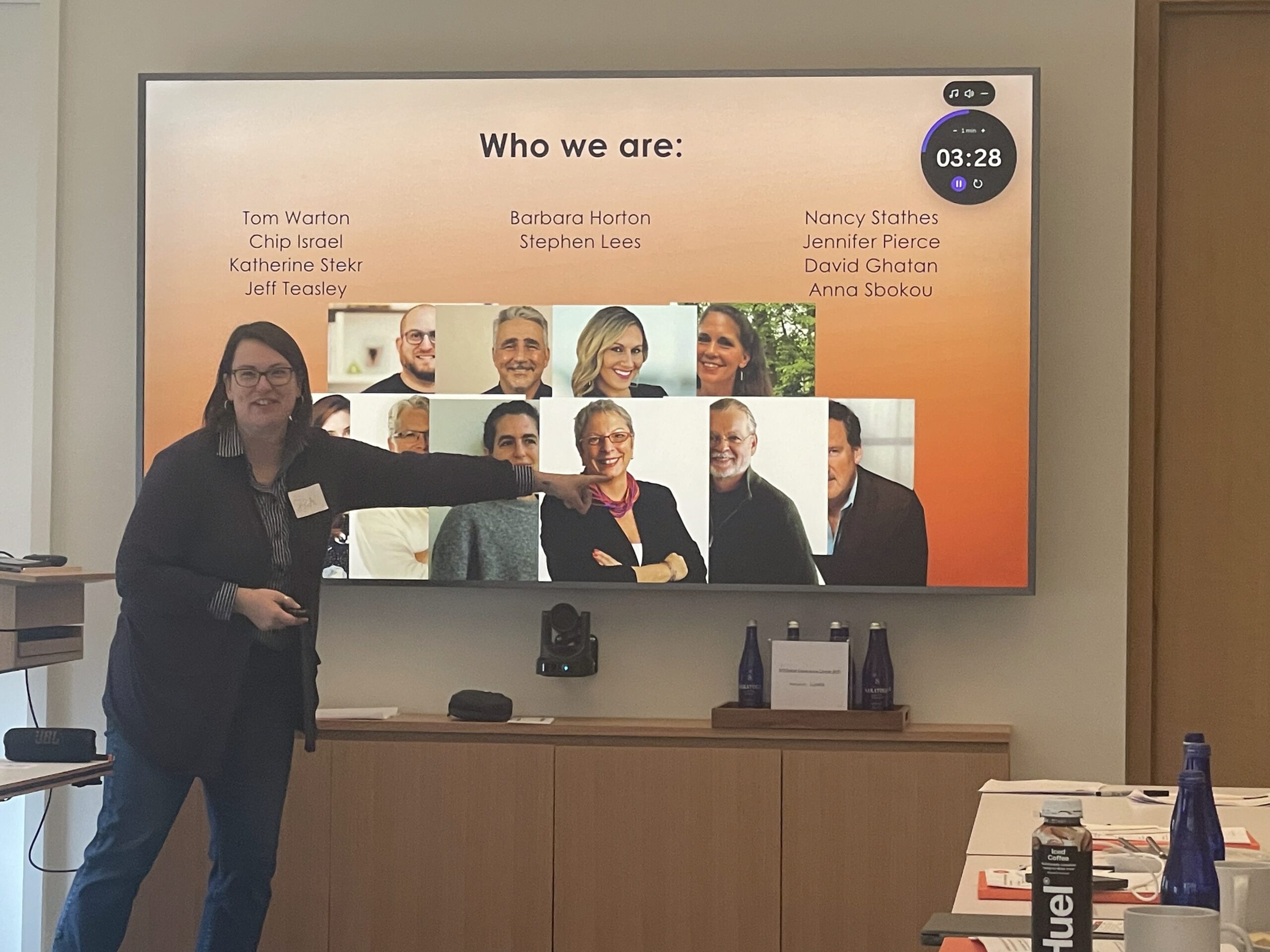
On the crisp afternoon of November 13, 2025, a select group of lighting designers and consultants gathered at the Lutron Global Experience Center in Manhattan. For five hours, they immersed themselves in the latest Business of Lighting (BOL) workshop, titled “Your Fee is Only HOW MUCH?” Facilitated by Justin Smith of Zweig Group, the session unfolded like a master class in value-driven fee setting—a precise blend of strategy, psychology, and bold confidence. While most attendees were independent practitioners, one designer from a leading New York firm added subtle depth to the dialogue.
In past BOL recaps, I’ve simply observed and reported. This time, however, Justin—whom I’ve come to know well—put me to work. Paired with the sharp-minded Sara Schonour, I dove into sticky notes and lively debate. What follows is merely a taste of the day’s insights; the full power of value-driven fee setting truly requires in-person participation—no article can fully capture its spark.

Screening Tool at Business of Light Workshop
Crafting a Go/No-Go Checklist: Filtering for True Value
A central exercise focused on building a screening tool to assess opportunities with rigor. Justin led us in pinpointing key questions that reveal “value alignment” in potential projects. The approach begins with a clear “Go/No-Go” framework, rating each factor from low value (1–5) to high value (6–10). Together, we outlined ideal and warning traits across five categories:
- Lead Source: The best leads come from trusted, repeat clients who favor your proposals. Red flags? Unsolicited RFPs copied to multiple competitors. As one participant noted, “If your rivals are CC’d on the RFP, it likely deserves a low score.”
- Project Fit: Does the work match your skills, market, and location? High-value fits feel seamless; low-value ones often involve vague goals or strong competition.
- Effort Analysis: Think about team strain. Green signals include familiar, enjoyable, sole-source projects with fair timelines and strong pay. Red alerts flash for drawn-out pursuits, heavy bidding wars, or distant jobs needing extra certifications.
- Risks: Clear scopes, reliable schedules, and solid relationships mean low risk. High risks include scope creep, late-paying clients, or architects stretching beyond their expertise.
- Value Fit: Hourly rate × hours is the bare minimum—not the target. True value-driven fee setting seeks premiums for expertise, future referrals, awards, or growth, where the client’s view of your worth far outpaces the effort required. Justin repeatedly warned against settling for hourly pay alone.
Most projects, he explained, land in the gray middle. Yet this exercise fostered brutal honesty: if the fit feels off, walk away. In one group activity, we reviewed lost bids—citing price shocks, pre-chosen winners, or blocked access to decision-makers—and realized many could have been avoided with sharper early questions.
Proving Expertise Through Outcomes: The Heart of Value-Driven Fee Setting
Next, the conversation turned to why clients—architects, engineers, or interior designers—hire lighting specialists. Expertise leads the list, but Justin pushed further: “Expertise is expected—how do you prove it? You show it.” Clients care less about flawless lighting design and more about results: higher retail sales, better workplace focus, or award-winning spaces that elevate their own brand.
Five core principles of value-driven fee setting emerged:
- A disciplined Go/No-Go process.
- Structured discovery to uncover value early.
- Anchoring projects to the client’s desired outcomes.
- A guided walk-through of your offer.
- Rehearsed responses to objections.
A lively debate arose over the client-owner divide. Legally, the architect signs the contract; strategically, the owner holds the vision. Justin was firm: refuse work without owner access. “How can we create value if we’re guessing?” he asked. Many nodded in agreement, sharing frustrations with gatekeepers who hinder direct contact and derail alignment.
To connect the dots, Justin introduced the Outcome to Value Map, linking client goals to your actions, risk safeguards, and scope. For instance:
- Outcome: Repeat retail traffic through adaptable lighting.
- Proof Actions: Design a DALI system for easy changes; include field-tunable fixtures.
- Risks Mitigated: Check art materials for fading; calculate gains like 3% higher conversions on 100,000 visitors at $25 each ($75,000 uplift) or 1% productivity rise for 50 employees at $60/hour ($62,400 yearly impact).
Quantifying value sparked passionate discussion. Justin highlighted examples: 20% lower cost per square foot compared to electrical engineers, or reduced maintenance from fewer fixture replacements. Challenges like shifting costs and limited data were acknowledged, but the message was clear—translate your work into client gains. A $15,000 fee should feel like a smart investment when compared to real returns.
Handling Objections with Poise: The Final Layer of Value-Driven Fee Setting
Even strong proposals can stumble. So Justin equipped us with “get out of jail free” phrases:
- “The price is what it is because you said X matters most—and we’ve built it to deliver.”
- “That line item protects against the risk you mentioned.”
- “Removing it exposes Y—are you okay with that?”
- “Which outcome matters most: A, B, or C?”
Through role-play, we practiced the shift: when price concerns surface, ask what to remove—not lower the fee. Experience objections often hide trust issues; probe gently, reframe, and resolve.
Justin also outlined a smooth negotiation rhythm across calls:
- Call 1: 15-minute value screen
- Call 2: 20-minute scope discussion
- Call 3: 10-minute close
Above all, skip the jargon. Speak at the decision-maker’s level—many don’t know lighting terms.
Key Takeaways: A Spark, Not the Full Flame
By focusing on value over hours, screening carefully, and measuring impact, lighting designers can demand higher fees and dodge low-return work. As Justin put it, “If someone else can deliver these results for less, they’re better—go with them.”
In a field blending art, science, and business, events like this remind us: your fee isn’t just a number—it reflects real value.
This article wasn’t a complete playbook for holding fees, but rather a brief look into the workshop. The report shares only fragments of value-driven fee setting. Its true magic happens live, amid ideas, laughter, and sudden clarity. For the full experience, join the next BOL online workshop on December 10. Your practice—and your bottom line—will thank you.
Interludes and Insights
During breaks, designers shared a common frustration: architects often wait until the last moment to hire lighting experts, then expect instant results.
Later, over drinks, an informal chat revealed a growing trend: large firms are managing workloads by outsourcing select projects to independent lighting designers—a smart, evolving partnership I’m seeing more often.
Thanks to Lutron for the stunning venue, BOL for meaningful programming, and Justin for a transformative day.
Go Deeper: Investing in Employees: Insights from the BOL
BOL’Discussions on Design Management
See what attendees are saying:

Michael Lombardi at the Business of Light Workshop