


One of the most thoughtful sessions I attended at Light Middle East this year wasn’t about products or controls—it was about people. Specifically, how multidisciplinary collaboration, mentorship, and emerging technologies like AI are reshaping the lighting design profession.
Moderated by Matt Waring, the panel brought together lighting designers and engineers with decades of global experience, including Jared Smith, Kristina Allison, Robert White, and Majeed Uz Zafer. The conversation centered on how lighting designers can work more effectively across disciplines, mentor the next generation, and navigate a rapidly evolving technical landscape.
What Multidisciplinary Mentorship Really Means
When we talk about mentorship in lighting, it’s no longer just about teaching lighting calculations or fixture selection. As Jared pointed out, today’s designers must understand how lighting interacts with architecture, HVAC, structure, and controls—and mentorship has to reflect that reality.
Multidisciplinary mentorship means helping young designers see the bigger picture. It’s not just about learning the craft of lighting, but learning how buildings actually work, how teams collaborate, and how to grow professionally within complex project environments.
Kristina added an important perspective from her experience mentoring across borders. Working with a mentee in Australia forced her to rethink assumptions shaped by UK and US standards. In her words, it became a two-way learning experience—proof that mentorship isn’t top-down, but collaborative.
Collaboration Across Disciplines Isn’t Optional Anymore
Robert emphasized that successful projects depend on understanding the nuances of other disciplines, not just their technical requirements. Misalignment often isn’t about bad intentions—it’s about communication gaps.
Whether it’s lighting designers working with video specialists, architects, or engineers, the goal is to find common ground early. When teams understand each other’s constraints and objectives, outcomes improve—not just technically, but creatively.
And yes, the ceiling always comes up.
As Kristina joked, the battle between lighting and HVAC for ceiling space is universal. The difference between success and frustration is clarity—knowing where lighting fits into the broader process and communicating that effectively.
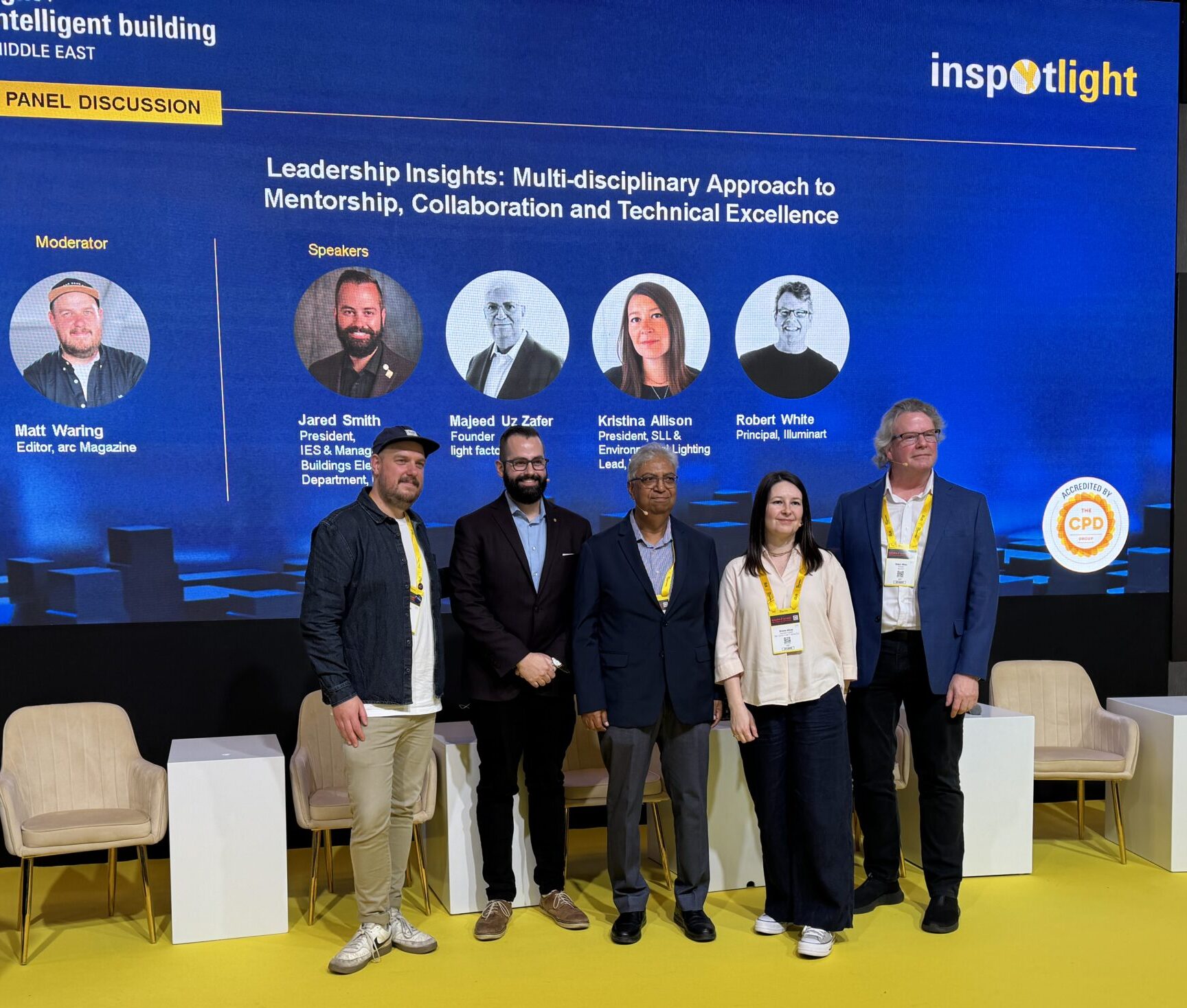
Left to right: Matt Waring, Jared Smith, Majeed Uz Zafer, Kristina Allison, Robert White
Scale, Complexity, and the Risk of Losing People
As firms grow and projects scale, challenges multiply. Jared Smith made a point that resonated: bad habits scale just as fast as good systems.
Large, multidisciplinary teams require intentional mentorship. Without it, junior designers can feel invisible as principals focus on client-facing roles. Creating psychologically safe environments—where people can ask questions, make mistakes, and learn—is essential to retaining talent and maintaining design quality.
Robert added that meaningful collaboration often happens outside massive coordination meetings. Smaller, direct conversations across disciplines can be far more productive than large calls where no one feels heard.
Mentorship Is About Confidence, Not Control
When the panel discussed what they try to instill in mentees, a common theme emerged: confidence.
Kristina spoke about encouraging curiosity and inquiry—giving young designers permission to ask questions and challenge assumptions. That confidence carries forward not just in lighting design, but in every professional interaction.
Robert stressed the importance of helping designers find their own voice. While mentors can share experience and ideas, the goal isn’t replication—it’s growth. Sometimes the best solution isn’t the one you’ve used before.
Majeed reinforced the need for guardrails without stifling creativity. Designers need support, accountability, and reassurance that someone “has their back.” Without that, creativity suffers.
AI in Lighting Design: Tool, Not Shortcut
Of course, no panel in 2026 would be complete without a discussion about AI in lighting design.
The consensus was refreshingly balanced. AI is a powerful tool—especially for visualization and concept exploration—but it comes with risks. Junior designers may be tempted to accept AI-generated outputs at face value, without questioning feasibility or physics.
Experience still matters.
AI-generated visuals must be reviewed, validated, and contextualized by designers who understand how buildings are actually built. Transparency with clients is also critical—especially when AI visuals may not reflect real-world outcomes.
As several panelists noted, this isn’t entirely new. Even before AI, renders often failed to match reality. The responsibility has always been on designers to educate clients and manage expectations.
The Bigger Takeaway
What stood out most from this discussion was that lighting design is no longer a standalone discipline. It’s deeply interconnected—with other building systems, with global standards, and with emerging technologies.
Strong mentorship, clear communication, and multidisciplinary collaboration aren’t “nice to have.” They’re essential for delivering better projects and building a stronger industry.
And while tools like AI will continue to evolve, the fundamentals haven’t changed: curiosity, accountability, and human judgment still matter most.
Go Deeper: