

How Foster + Partners Is Using AI to Transform Lighting Design Workflows
PARIS — Few subjects generated more discussion at IALD Enlighten Europe than artificial intelligence.
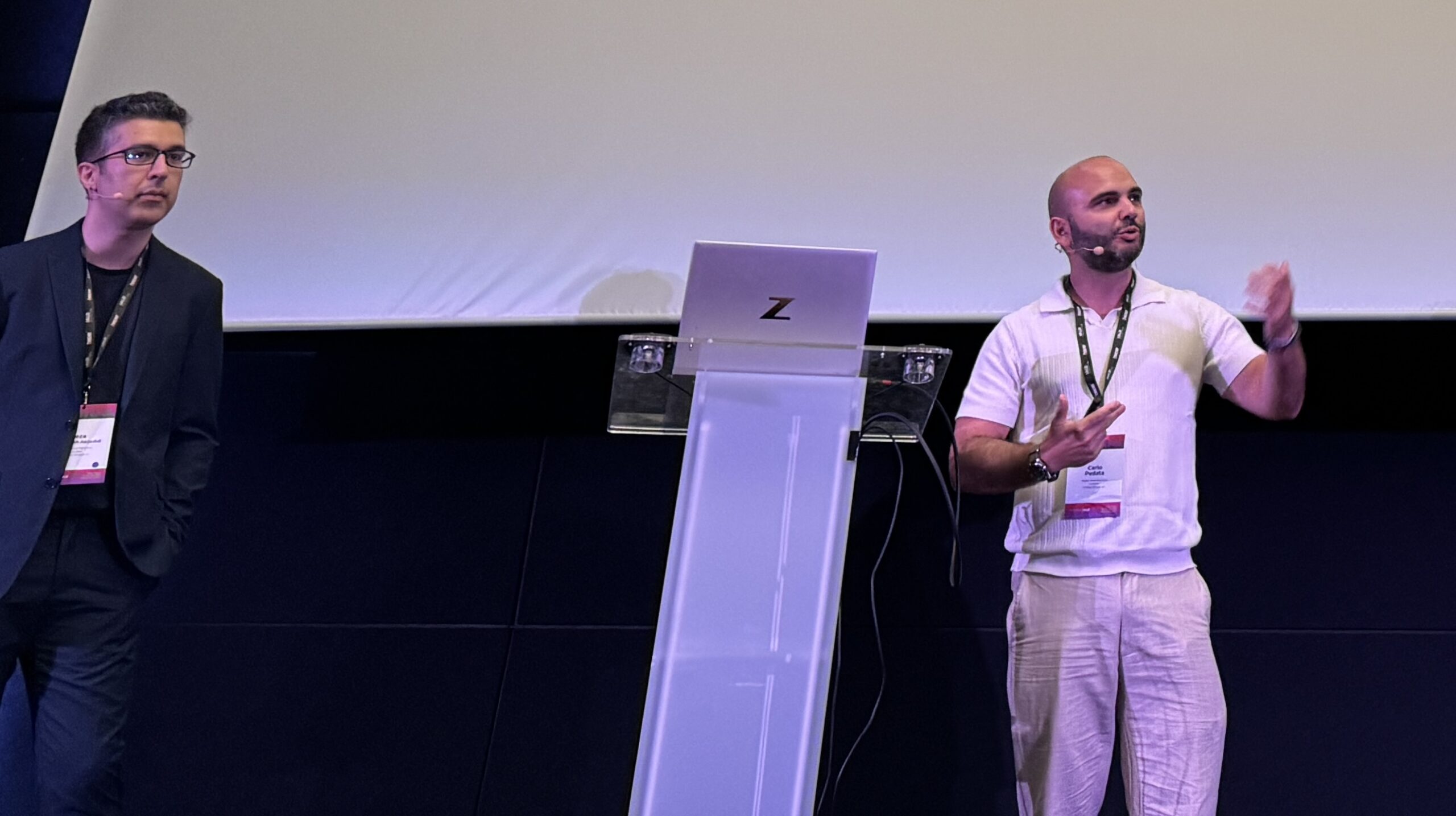
During a standing-room-only session titled Reporting from the Front Line: How Gen AI is Transforming Lighting Workflows, Carlo Pedata and Reza Jalalzadeh Asrjadidi of Foster + Partners offered attendees an inside look at how one of the world’s most influential architecture firms is using AI in its lighting practice. Their presentation moved beyond the hype that often surrounds artificial intelligence and focused instead on practical applications, real-world limitations, and the continued importance of human judgment.
The audience quickly learned that AI has not replaced designers at Foster + Partners. Instead, it has become another tool in the firm’s expanding digital toolbox.
Building a Secure AI Environment
The Foster + Partners lighting team has developed an internal web-based platform that allows designers to access multiple AI engines while maintaining strict data security standards. The system helps protect client information while allowing designers to experiment with emerging technologies in a professional environment.
For a global design practice handling confidential projects, that level of control is essential.
The presenters explained that AI adoption at Foster + Partners mirrors earlier technological shifts within the profession. Just as CAD transformed drafting and BIM revolutionized coordination, AI is beginning to reshape portions of the design workflow.
AI’s Greatest Strength: Speed
Throughout the presentation, Carlo and Reza emphasized that AI is particularly effective at accelerating repetitive tasks.
The technology can remove unwanted people from photographs, upscale reference images, generate visual concepts, create animations from still images, and quickly explore multiple design directions. Tasks that once required hours can now be completed in minutes. The team demonstrated how AI can help transform daytime renderings into nighttime scenes, generate presentation imagery, and create visual references for discussions with clients and architects.
Yet the presenters repeatedly stressed that AI works best as part of a hybrid workflow.
Their process often combines traditional rendering tools, Photoshop, and AI-generated imagery. Rather than replacing existing software, AI serves as an enhancement to the design process.
A Case Study from Paris
One of the most compelling portions of the presentation involved a workplace project in Paris.
The project required the renovation of a historic building while preserving significant architectural features. The client wanted the space to feel residential rather than corporate, with integrated artwork, decorative lighting elements, and carefully selected materials.
The Foster + Partners team began with sketches, discussions, and traditional lighting analysis. After evaluating multiple concepts, they used AI to help visualize design ideas and communicate possibilities more effectively. The workflow remained heavily guided by designers. AI-generated images were reviewed, combined, refined, and adjusted before reaching the client.
The message was clear: AI may generate options, but designers still make the decisions.
Human Judgment Remains Essential
One theme surfaced repeatedly during the session. AI can produce compelling images, but it does not understand lighting design.
The presenters showed examples where AI-generated imagery appeared convincing at first glance but contained unrealistic lighting conditions, impossible shadows, or architectural details that could never be constructed. Designers must evaluate every output critically before relying on it.
That concern extends beyond visualization.
The speakers expressed worries about reduced originality, loss of critical thinking, and the possibility that designers might become overly dependent on AI-generated solutions. They also cautioned against creating unrealistic expectations for clients through images that cannot be achieved in the built environment.
Will AI Take Designers’ Jobs?
The question inevitably arose during the audience discussion. The presenters acknowledged that clients can now generate images on their own using publicly available AI tools. However, they argued that lighting designers bring something far more valuable than image creation.
Designers understand how to translate an idea into reality.
They understand codes, technical limitations, budgets, maintenance requirements, and human experience. They know when an image represents a viable design solution and when it is merely an attractive picture.
As one attendee summarized during the discussion, the most effective workflow may be “human first, AI second, then human again.” The presenters agreed.
Looking Ahead
The Foster + Partners team closed with a message that resonated throughout the room. Artificial intelligence is neither a miracle solution nor an existential threat. It is a tool. Like every technological advancement before it, its impact will depend on how designers choose to use it.
For now, AI appears best suited to handling repetitive tasks, accelerating visualization, and supporting exploration. Creativity, judgment, and responsibility remain firmly in human hands.
Judging by the standing-room-only crowd at IALD Enlighten Europe, lighting designers are eager to learn how to strike that balance.
Read more from IALD Enlighten Europe: IALD: Four Women Open Up About the Business of Lighting Design
Sustainability Initiative Moves Toward Industry-Wide Standards