



Architects Struggle to Find the Right Lighting Fixture. Archlior Thinks It Has the Answer
An architect finds the perfect lighting solution in a completed project.
The fixture is exactly what the client wants. The designer zooms in on the image, uploads it into Google Lens, and hopes to identify the product.
Instead, the search returns Amazon listings, copycat products, and dozens of unrelated websites. After opening 10 or 15 browser tabs, the architect is often no closer to finding the actual fixture.
That frustration inspired Valentina Ožbolt, Ali Alsamawi, and You Zou to launch Archlior, a new platform that aims to simplify the lighting specification process for architects, interior designers, and lighting professionals.
The company, incorporated in Croatia, launched earlier this year and already includes more than 300 lighting brands, 50,000 products, and 20,000 completed lighting projects.
Irecently met with the founders to see how the platform works and where they hope to take it.
Solving a Problem Architects Know Well
Unlike many technology startups, Archlior did not begin with software. It began with an architect’s daily frustration. Valentina has worked on projects in Qatar, Italy, London, and Croatia. She said the same problem followed her everywhere. “Architects and interior designers are not lighting designers,” she explained. “We know how we want a space to feel, but we don’t always know which fixture creates that effect.”
When no lighting designer is involved, architects often search completed projects for inspiration. Finding the actual fixture, however, can become a time-consuming exercise.
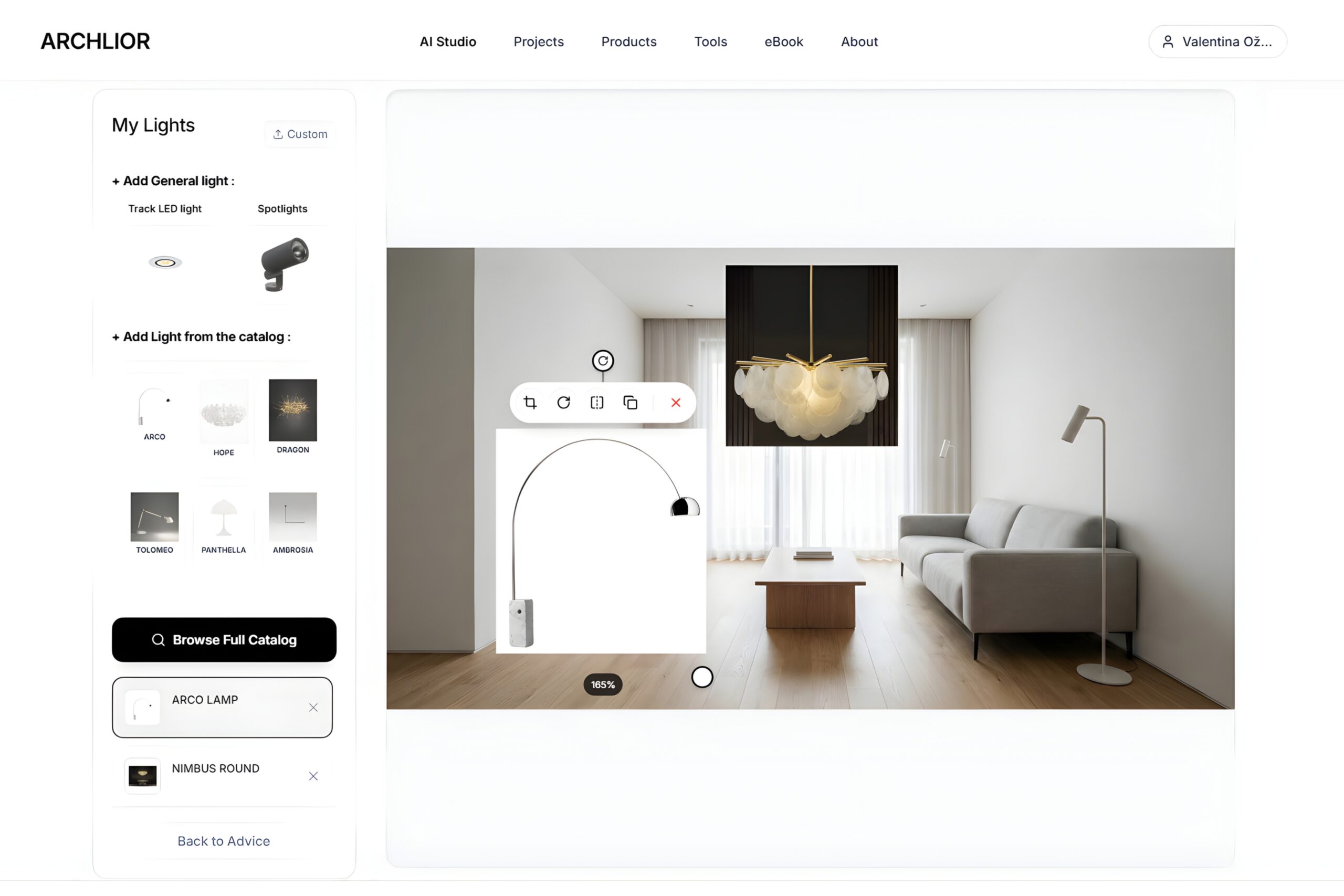
The user ads luminaires to the photo
From Inspiration to Specification
Archlior gathers projects from lighting manufacturers and lighting design firms into a single searchable database.
Users can search by project or by product. Every listing attempts to connect the completed project with the manufacturer, fixture, lighting designer, and project team whenever that information is available.
Instead of bouncing between dozens of manufacturer websites, users can begin their search in one place. The platform currently contains more than 20,000 architectural lighting projects from around the world.
During my demonstration, I searched the platform much like an architect would. The experience was intuitive and considerably faster than opening multiple manufacturer websites one at a time.
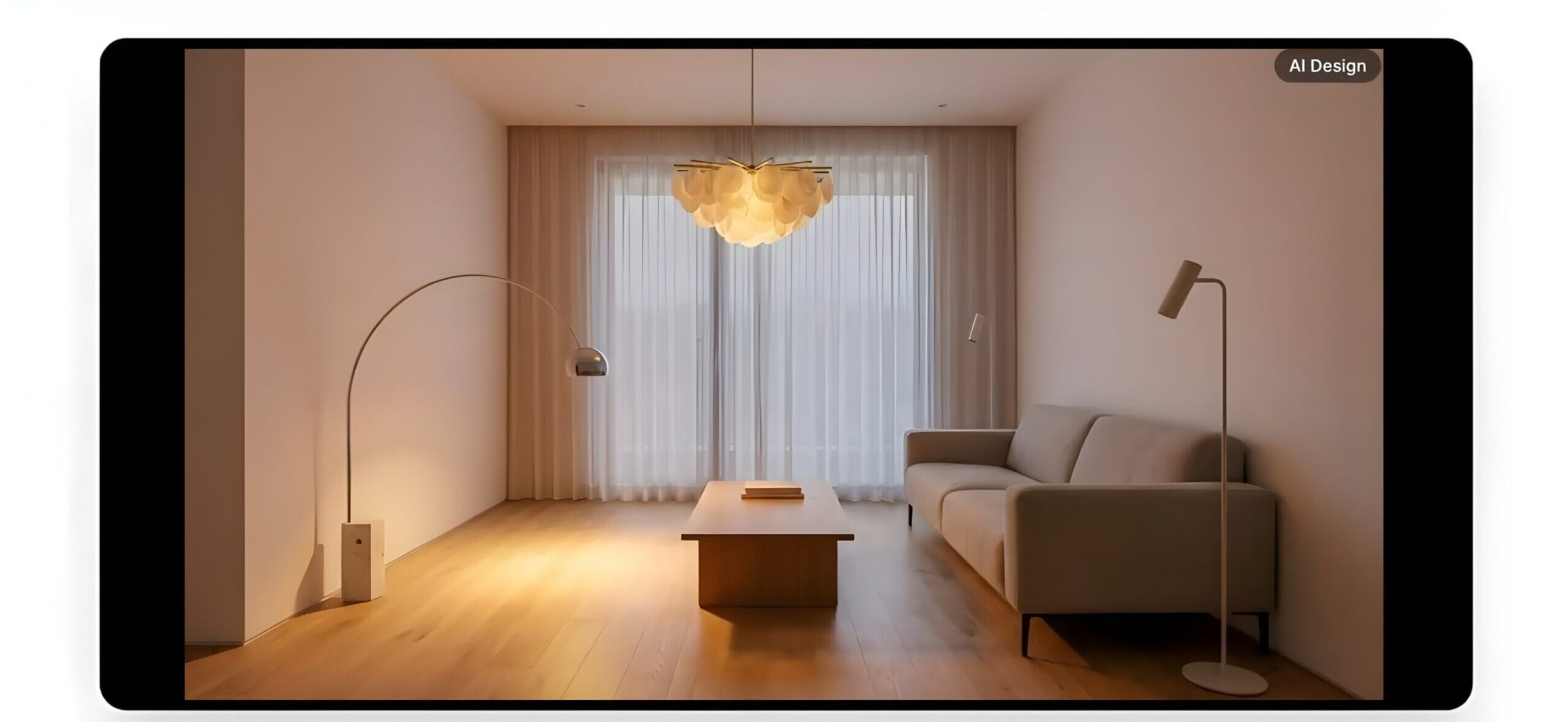
Archlior returns a rendition
AI Helps Visualize the Design
One feature that immediately caught my attention was the AI Lighting Studio. Users upload a photograph or rendering of a space. The software then generates new lighting concepts by changing light levels, color temperature, and overall atmosphere.
Although the YouTube demonstration used a residential room, Valentina emphasized that the platform targets professional users. Most of the projects currently on Archlior involve commercial buildings, hospitality, retail, offices, mixed-use developments, and other architectural applications.
The residential example simply provides an easy way to demonstrate the AI.
For architects without extensive lighting experience, the visualization tool could become a useful design aid during the early stages of a project.
The Missing Piece
As impressive as the platform is, I found one area that still needs work. When I clicked on products expecting BIM files or pricing, many selections generated an inquiry instead of providing immediate access to product information.
Ali agreed that this is one of the team’s highest priorities.
Manufacturers are beginning to receive dashboard access that allows them to upload BIM files, CAD drawings, specifications, and other technical information directly into the platform. As more manufacturers participate, that information should become immediately available. That change will be important. People typically want answers while they are working, not after waiting for an email response.
The founders are careful not to describe Archlior as an online store. Instead, they see it as a specification platform. Their long-term vision allows architects to discover products, compare alternatives, visualize designs, request quotations, and eventually connect directly with manufacturers.
Some architectural lighting products are custom engineered, making traditional online purchasing impractical. For those products, inquiries will likely remain part of the process.
A New Opportunity for Lighting Designers
I also see an opportunity for lighting designers.
Many designers showcase beautiful photography on their websites. Few identify the fixture manufacturers used in those projects. Historically, that has been intentional. Award programs often discourage listing manufacturers, and many designers simply continue that practice on their own websites.
Archlior hopes to change that.
The platform encourages stronger connections between completed projects and the products used to create them.
That philosophy closely mirrors what we have done for years in designing lighting (dl). Our project typically feature fixture schedules because readers want to know not only what looks good, but how the design was achieved.
If lighting designers embrace that level of transparency on their websites, Archlior could become an important research tool for architects, designers, and manufacturers alike.
My Take on The Archlior lighting platform
After spending time with the founders, I believe they are solving a real problem. The platform already offers an impressive collection of projects. The AI Lighting Studio is both practical and affordable. At about €10 per month for expanded use, pricing should not be a barrier for most professionals.
The biggest challenge now is execution.
If Archlior succeeds in giving architects instant access to BIM files, specifications, pricing, and downloadable content, it could become a valuable daily resource rather than simply another place to browse beautiful projects.
The company is moving in that direction. Manufacturers are beginning to populate their own dashboards, and the database continues to grow.
We’ll revisit Archlior later this year after more manufacturers have fully integrated their product information. It will be interesting to see whether the platform becomes part of the lighting specification workflow—or simply another source of inspiration.