

80 Trips Around the Sun: David DiLaura on Change, Learning and Trust
On 15 August, friends, colleagues, former students and members of the lighting community gathered at the Koenig Alumni Center at the University of Colorado Boulder to celebrate Dr. David DiLaura’s 80th birthday. The occasion offered more than an opportunity to recognize a milestone. It brought together many of the people DiLaura has taught, challenged, mentored and influenced throughout his remarkable career.
During the celebration, David reflected on eight decades of change—both within the lighting profession and beyond it—as well as the enduring importance of learning, teaching, creating and trusting others to recognize our potential. His remarks moved easily between humor and humility, ultimately becoming a tribute to the people whose careers and accomplishments he helped shape.
What follows captures the substantial majority of DiLaura’s remarks as they were delivered that evening. It has been lightly edited for clarity, continuity and readability and should not be considered a word-for-word transcript.
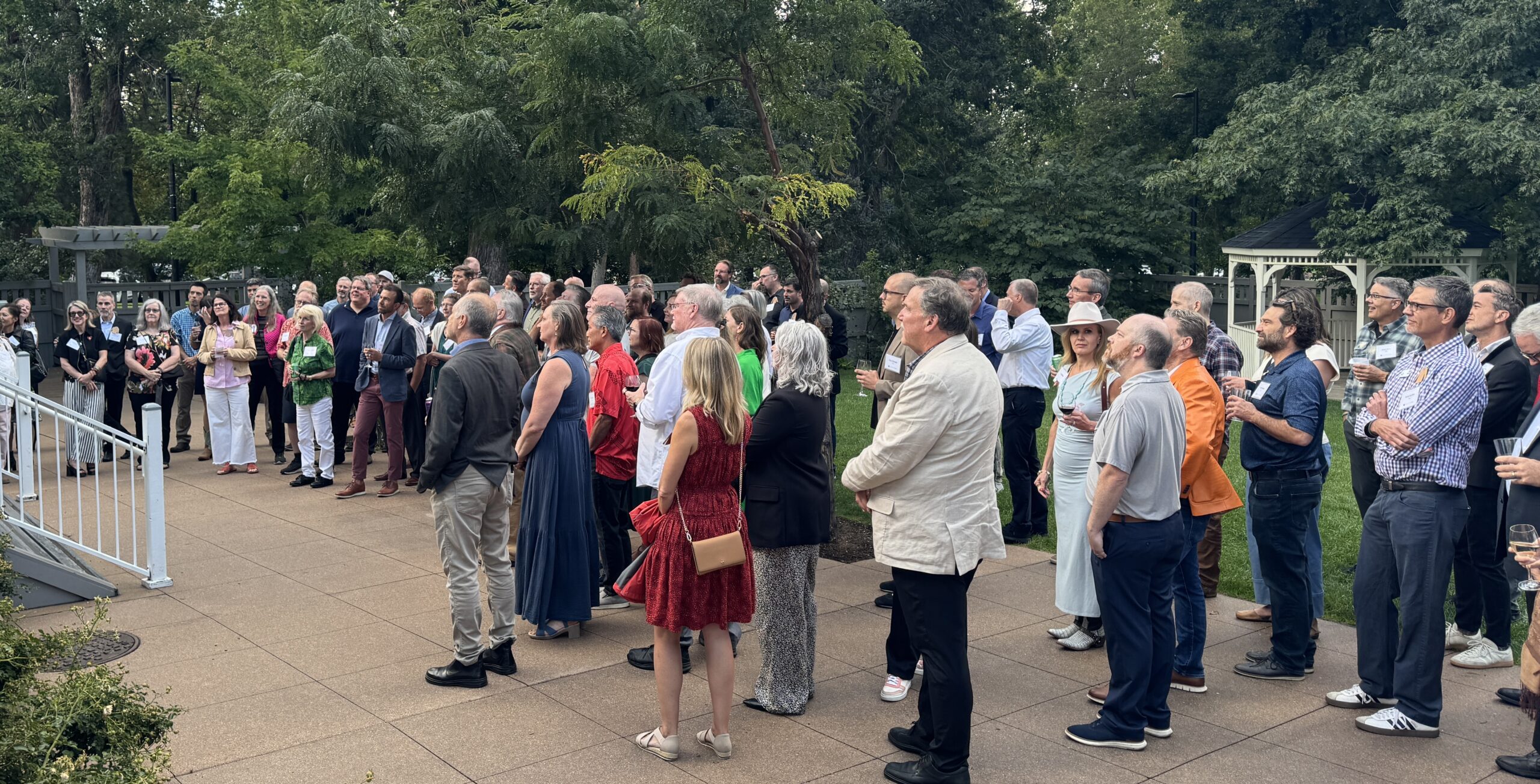
The crowd looks on during David’s talk
David DiLaura’s Comments:
To be 80 years old, there’s a certain solemnity about that. And to have so many people of goodwill, good backgrounds and good education assembled requires, as I hope you’ll notice, that I appear tonight in the ancient ceremonial regalia of teachers of illuminating engineers.
Some of you have pinned on that today, right?
Now, we have parties like this because people arrange for that. And so there are folks who have done a lot of work to bring us all together.
Walter Beamer, Teal Brogden, Nancy Clanton, Bob Davis and Jeff Quinlan have helped put all this together. Because it just doesn’t happen on its own, right?
You can’t go around the sun 80 times without noticing things. It would be an ingenious kind of carelessness if you went around the sun 80 times and didn’t notice anything.
And some things I’ve noticed are changes.
I’m not talking about the loud, brassy changes that get under our skin, make us nervous and get between us and our sleep. I’m talking about changes that affect the way we live—changes that affect what we do.
As a lighting guy, one of the big changes I’ve noticed is that the world is rapidly becoming self-luminous.
We struggled for years to put light on desks and machines and here and there so that we could see things. Well, now if you do that, it gets you sued. Because the thing you’re dropping light on is making its own light, and it doesn’t want your light.
It’s got its own.
It’s a different world.
And there’s certainly another thing that is affecting us, and that is large language models and the AI agents that are in front of them. The jury’s out, but I’m actually very enthusiastic about it.
Like all technology, it’s a boon and a curse. Of course, right? That’s just the nature of the things that we make.
There’s another thing that I’ve noticed, and that is the way in which professional societies treat younger members of that same community.
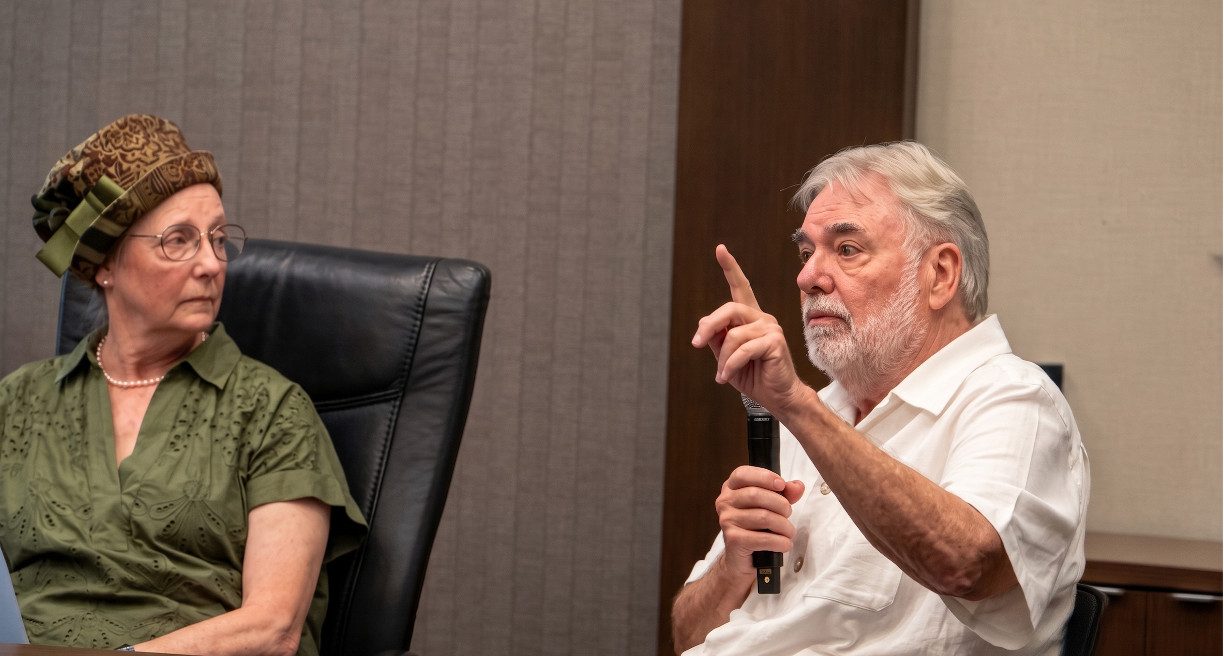
David DiLaura and Naomi Miller at the IES26 Emerging Professional Meeting in Denver
I had the privilege of sitting with Naomi Miller at IES26, The Lighting Conference. We were speaking at the Emerging Professionals session at the conference. EP is Emerging Professional.
Now, I’d forgotten the pleasure of Naomi’s company, and that was reason enough to attend. But to sit in front of those students again was a rebuke and a stumbling block to those who are pessimistic about the young.
I was deeply impressed by the attention and the questions that they asked.
Now, in 80 trips around the sun, you see changes. But more subtly, you also see constants.
And you have to look carefully to find the constants. What are the constants? Think of all the things that are different and attempt to isolate the things that aren’t.
One of the constants I see is the human need to learn.
Learning is a constant. Learning is a constant because it changes with the pace of evolution itself, because that’s the pace at which we change.
Slow. Not measured in decades, but in millennia.
So the way in which we learned to build the pyramids, the mechanism that’s operating in our heads, is the same then as it is now.
Now, one of the things that’s not constant is teaching. Because teaching is, depending on your point of view, either afflicted by or benefits from the latest whiz-banger in presentations, right?
How does technology change the way we drop stuff in front of people?
I’m not concerned.
One of the other things that’s also a constant is the deep satisfaction that comes from creating things.
All the people standing in front of me are creators. Creators of companies, creators of projects, creators of progress and processes. All of you are creators.
In 500 BC, Confucius said, “Is it not a delight to learn a thing and, in due time, put it to use?”
All of us would say it is indeed.
It is the thing that gets me going every blessed day.
Now, that was the proximate cause for our getting together—my 80 trips. But the reason we are getting together is because of you.
Your accomplishments, your prizes, your projects, your successes, your influence, the companies you’ve created, the people you yourselves have mentored, and all the betterment that you’ve brought to the world.
There’s something else about you. That’s your scars and wisdom, because you’ve taken risks. You have failed.
You don’t get where you are unless you really screw it up.
“Oh my God, did I do that?”
And, of course, the answer is yes. Yes!
Without the scars and wisdom and failure, I don’t think it’s possible to succeed.
The thing, though, that strikes me most about you is the trust you were willing to place in me, in this institution and in this process.
It was a great gift to watch you.
So, you trusted someone to push you and push you and push you. Remember that?
In the moment when you said to yourself, in the silence of the night: “DiLaura? You need to jump off the nearest high mast.”
You didn’t.
Because you trusted me and the process, and you had the courage to move through that glass wall.
Because I know you didn’t believe it at the time, but when I first got to know you, I knew your capability better than you did.
You had a very small idea of what you were capable of doing. And I struggled to get you to believe what I knew to be true about you. In order to do that, you had to trust me.
And you did. And the result is here. This kind of success.
Now, I want you to think about something.
God forbid, if lightning should strike this tree, it would send lighting back 25 years.
There are not many places and groups of people in the world where you could say that.
It’s not because of me.
It is because of you.
Now, prizes and praise are good. I’ve had my share, and I’m always grateful to be honored.
But tonight, you are showing an affection which is the greatest, truest, highest gift you can give—especially to someone in their autumn years.
And for that, thank you.
Watch a portion of his speech here:
Go Deeper: IES26 Lighting Icons: Miller and DiLaura Share Career Lessons
Bamboozle, Red Pajamas and a Volvo: Celebrating David DiLaura