


Four decades after he started the firm, Domingo González is still the old guy scribbling in the corner, or so he says. Three of the people who know the practice best tell a fuller story.
In 2002, Frank Conti, the founder of Enterprise Lighting Systems, brought your humble editor to Domingo González Associates to pitch Domingo González, LC, IALD, MIES, on the merits of electronic HID ballasts. Before we went in, Frank offered a word of caution. Domingo, he said, was a tough guy. Be firm, but polite.
More than two decades later, I was asking Domingo for an interview instead of asking him to consider a ballast. This time, he set the terms. He’d do the interview only under one condition: if I spoke with his colleagues, too.
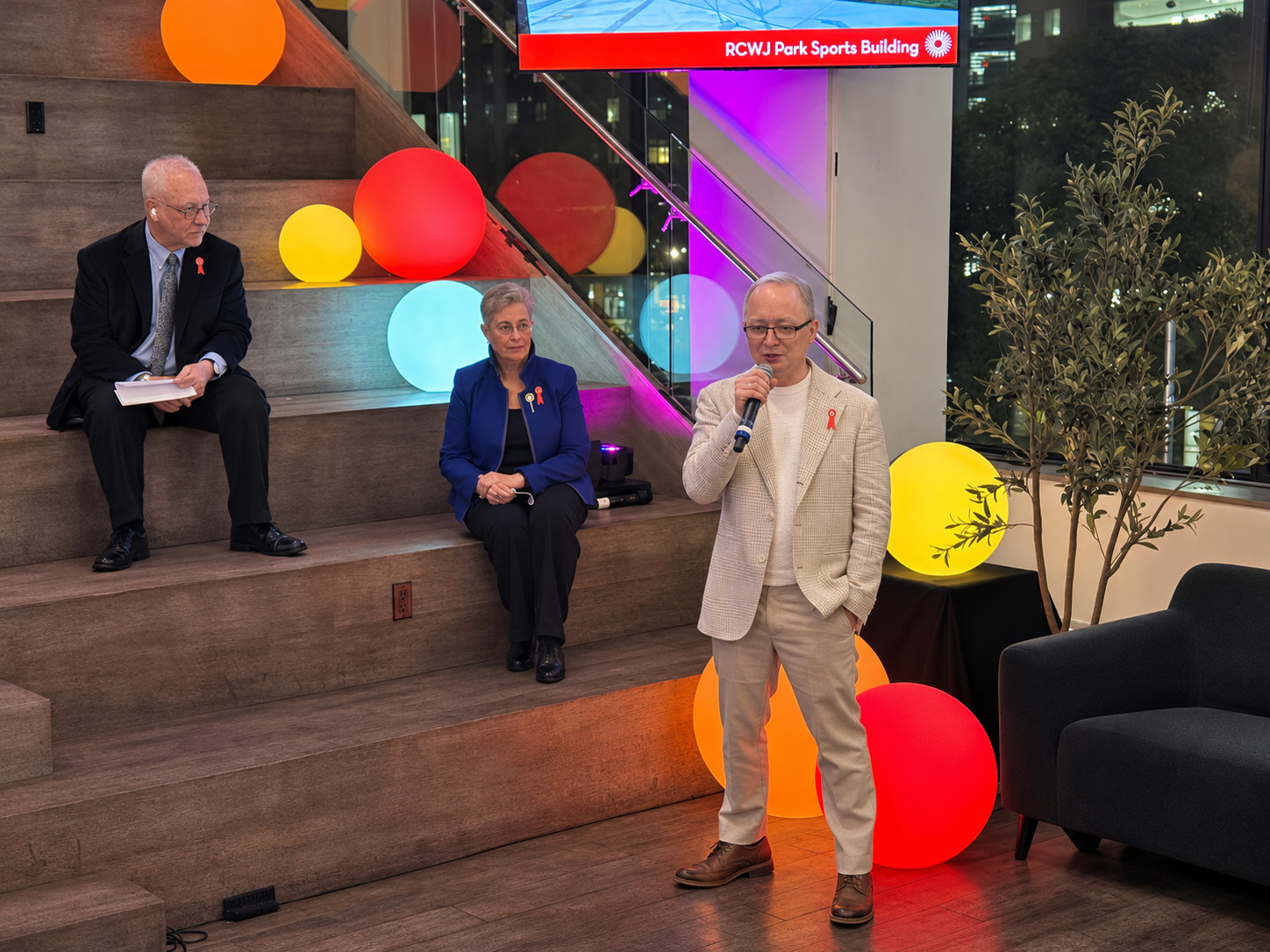
The occasion was the 40th anniversary of Domingo González Associates (DGA), celebrated on Broadway in New York City on 5 November 2026 with more than 200 friends, clients and colleagues in the room. I sat down with AC Hickox, LC, CLD, IES, IALD, LEED AP BD+C, vice president and managing principal, Ilva Dodaj, LC, IES, IALD, associate principal and Phat Quach, IES, LC, LEED Green Associate, director, associate principal. I put the same questions to each of them.
What brought you to DGA?
Few careers at DGA began according to plan.
AC came to DGA by merger. She had her own firm, AC Hickox Lighting Design, which she folded into DGA in a decade she graciously declined to name.
Ilva arrived in late November 2007 as an intern, expecting to stay a few weeks. “Almost twenty years later, I’m still here,” she says. She studied architecture and international relations, and was drawn to transportation, infrastructure and public space. DGA offered the chance to work on large, complex projects that people use every day and that often depend on public investment.
The timing, she says, was fortunate. “I entered architectural lighting just as the LED revolution was beginning.” At DGA, she worked with optical engineers, manufacturers, architects and public agencies to see what the technology could do. The work ranged from helping redefine the LED lighting standard for Chicago’s parks to developing one of the first wireless DMX-controlled parks in the country and a fully color-changing lighting system for a major new bridge in the Northeast. Then there was Domingo, who, she says, “from the beginning had this remarkable desire to teach, explain, tell stories, and challenge the people around him.”
Phat’s path was less deliberate still. He graduated from Temple University with an architecture degree in 2011, when jobs in architecture were still scarce after the housing crash. He applied to nearly anything with design in the job description, including interior design and even kitchen design. His only educational exposure to lighting had been part of one building systems course. Then he met Domingo, who took a chance on him.
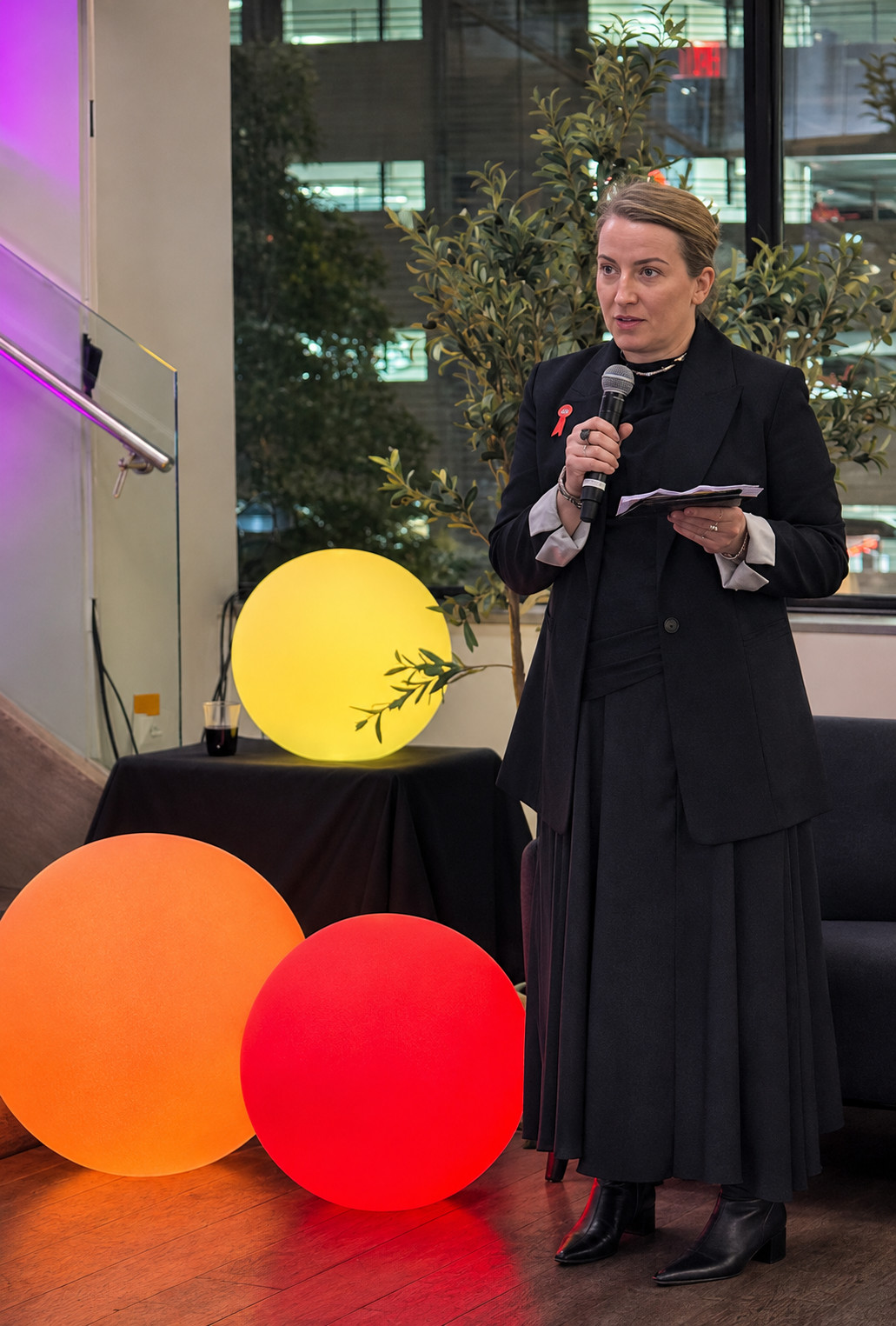
Ilva Dodaj, LC, IES, IALD, associate principal
What has working with Domingo taught you about lighting design?
AC spoke about the difference between theatrical and architectural lighting. She came out of theater, went on to work in both fields and has led several discussions for designers considering the move from the stage to the built environment. “The time frames, the pressures, the equipment, the applications are all very different,” she says. The work has light in common. In practice, the two jobs ask very different things of a designer.
Ilva thinks of light as an architectural material. It shapes how we perceive space, form and texture. It’s a view she shares with Domingo. “In many ways, the most successful lighting is the lighting you experience without being particularly conscious of its source,” she says. Domingo taught her the rigor it takes to get there. A designer has to understand the optics, the technology and how the building goes together. “Having a great design idea is one thing,” she says. “Being able to execute it successfully, often within extraordinarily complex buildings and with many competing constraints, is quite another.”
For Phat, the lesson concerns what happens after opening day. “There is much more to lighting than the end result,” he says. Domingo cares about how a project will look five or ten years later and how the people who inherit the system will maintain it. Phat now asks those questions at the start, when the answers can still change the design.
Which DGA project means the most to you?
For Ilva, it’s Moynihan Train Hall, which we featured in designing lighting (dl) in 2021. She spent about seven years on the project, working at the intersection of transportation, historic preservation and architecture. Each brought its own stakeholders and priorities. “Great design doesn’t emerge from working in isolation,” she says. “It comes from bringing together different disciplines, perspectives, and expertise, sometimes under tremendous pressure, toward a shared vision.” For Ilva, the privilege was helping make the lighting feel like part of a public building in the city where she built her career. Read our 2021 coverage.
Phat didn’t hesitate either. He chose Nashville’s Korean War Veterans Memorial Bridge and reminded your humble editor that we first met over that very project, when I interviewed him at the 2016 IESNYC Lumen Awards gala. I remembered the bridge. Phat remembered the date.
The bridge also illustrates his point about maintenance. The city could control each LED luminaire individually, and a crew could replace one fixture at a time. That gave Nashville a way to change how the bridge looked at night and a practical way to keep it looking that way, which was a big deal in 2016.
How does Domingo influence your work today?
Domingo was first Ilva’s teacher, then her mentor and eventually her collaborator, both on projects and in their work in education. “He challenged me to develop my own approach and gave me the freedom and responsibility to do so,” she says. Now that she leads teams of her own, she tries to give younger designers the same room to make decisions and challenge hers.
Phat’s version is more succinct. In his early years, he did what Domingo asked. Now, he says, “we seem to ask the same questions.” When Domingo comes into a meeting late, he’ll sometimes ask the very questions Phat has already put to the team. As Phat sees it, “he has trained me well.”
AC keeps an eye on the major proposals DGA pursues and mentors the designers who will take on that work. As managing principal, she gets an early look at what a job will demand. She also gets to help the people who’ll make those decisions once the job is theirs.

Guests celebrating the 40th anniversary of Domingo González Associates
Is there a story that captures Domingo’s personality?
“Oh, there are so many stories about Domingo!” Ilva says. He loves comic books, Marvel movies and cinema in general. Nearly everyone in the office acquires a superhero nickname at some point. He also has an endless supply of movie references, though some come from films so old that, as Ilva puts it, “half the time I have absolutely no idea what he’s talking about!”
Phat’s story comes from his own backyard. He was hosting a cookout, but Domingo insisted on taking charge of the grill. Once Phat handed it over, Domingo politely asked how he liked things done. Phat explained. Domingo listened, then replied, “OK, this is how I am going to do it.”
I thought of Frank Conti telling me to be firm but polite. Phat was happy to let Domingo run the grill. His mother, who was there that day, was another matter. Domingo can be well “Domingo,” Phat told me, and so can his mother. “My mom gave him a run for his money.”
What does the future hold?
Ilva has already seen LEDs change what a lighting practice can do. Now she’s watching artificial intelligence, more sophisticated controls, new fabrication methods and growing environmental responsibilities change the work again. “But technology is only as meaningful as what we choose to do with it,” she says. She’s interested in what those tools can do for the people who use a building or a public space. She’s equally interested in giving younger designers the knowledge and independence to decide when those tools belong on a project.
Frank Conti was right about Domingo. I’d take his advice into a meeting again, and I’d probably let Domingo have the grill. What I hadn’t counted on at the anniversary was hearing how much room he’d made for other people to exercise their own judgment. Phat described it in a meeting Domingo walked into late. Ilva described it in the freedom to find her own way through a project. AC is giving the next generation of designers a chance to do the same.
In a video interview with me, Domingo put it more simply that evening. “I’m just the old guy scribbling in the corner,” he told me. “They’re the ones who are making everything happen.”