

Mariana Figueiro on Lighting for Human Health: Bright Days, Dim Evenings, Dark Nights
At the ArchLIGHT Summit, Mariana Figueiro translated decades of light-and-health research into a practical message for the lighting industry: light affects far more than vision, and designers should start treating timing, intensity, spectrum, and darkness as part of the design problem. Lighting for Human Health is now a critical consideration for many lighting designers.
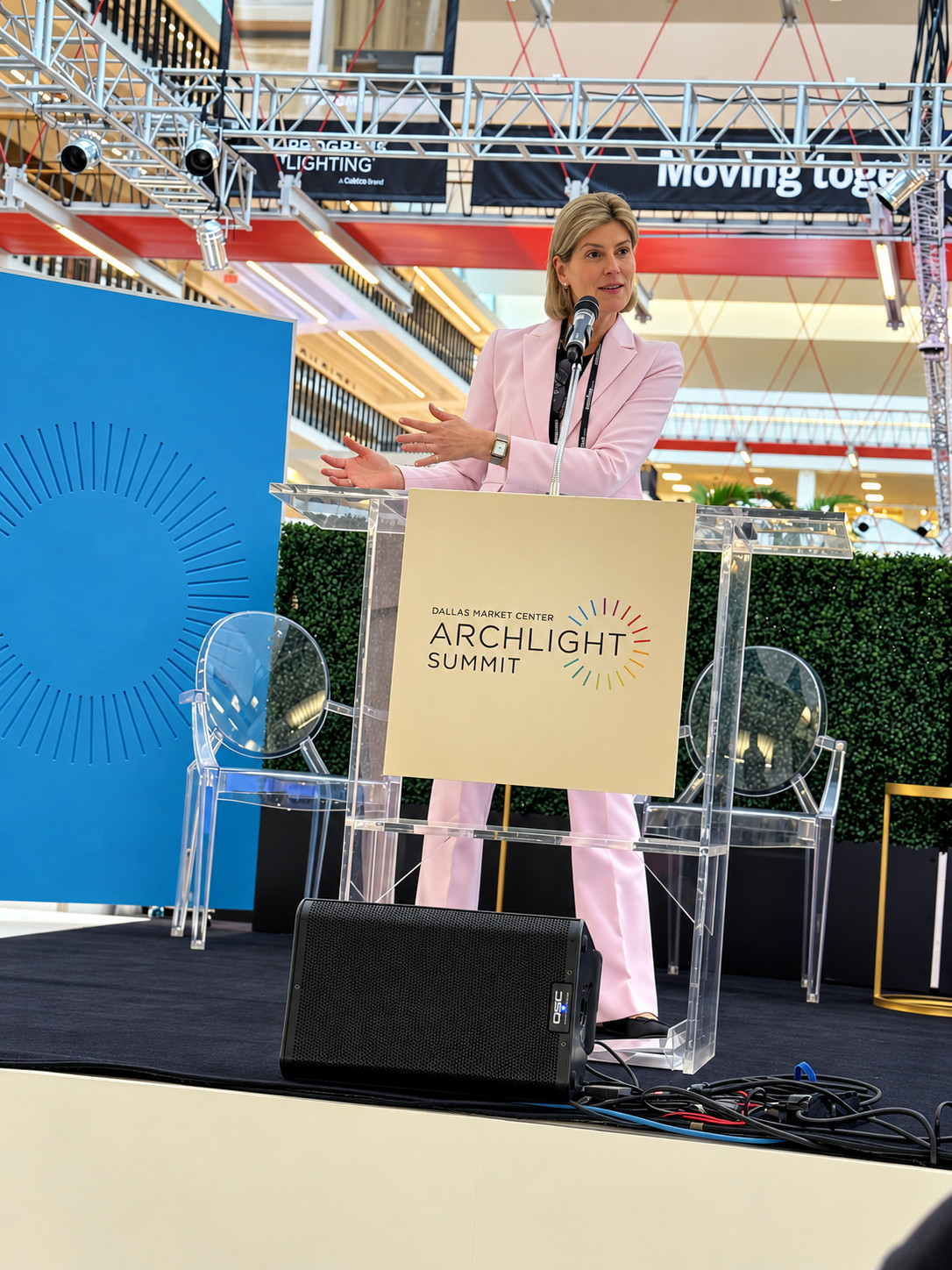
Mariana Figueiro, PhD, Professor and Director of the Light and Health Research Center at Mount Sinai School of Medicine, delivered one of the most research-heavy sessions at the ArchLIGHT Summit, but her message was remarkably straightforward.
Most people still think of lighting in purely visual terms: turn the light on and you can see; turn it off and you cannot. Figueiro argued that this view misses much of what light actually does to the human body.
“Light is essential for vision,” she explained, but it also affects circadian timing, alertness, mood, sleep, orientation, and even postural stability. The challenge for designers is to translate that science into real environments without making the process unnecessarily complicated.
 Light Does More Than Help Us See
 Light Does More Than Help Us See
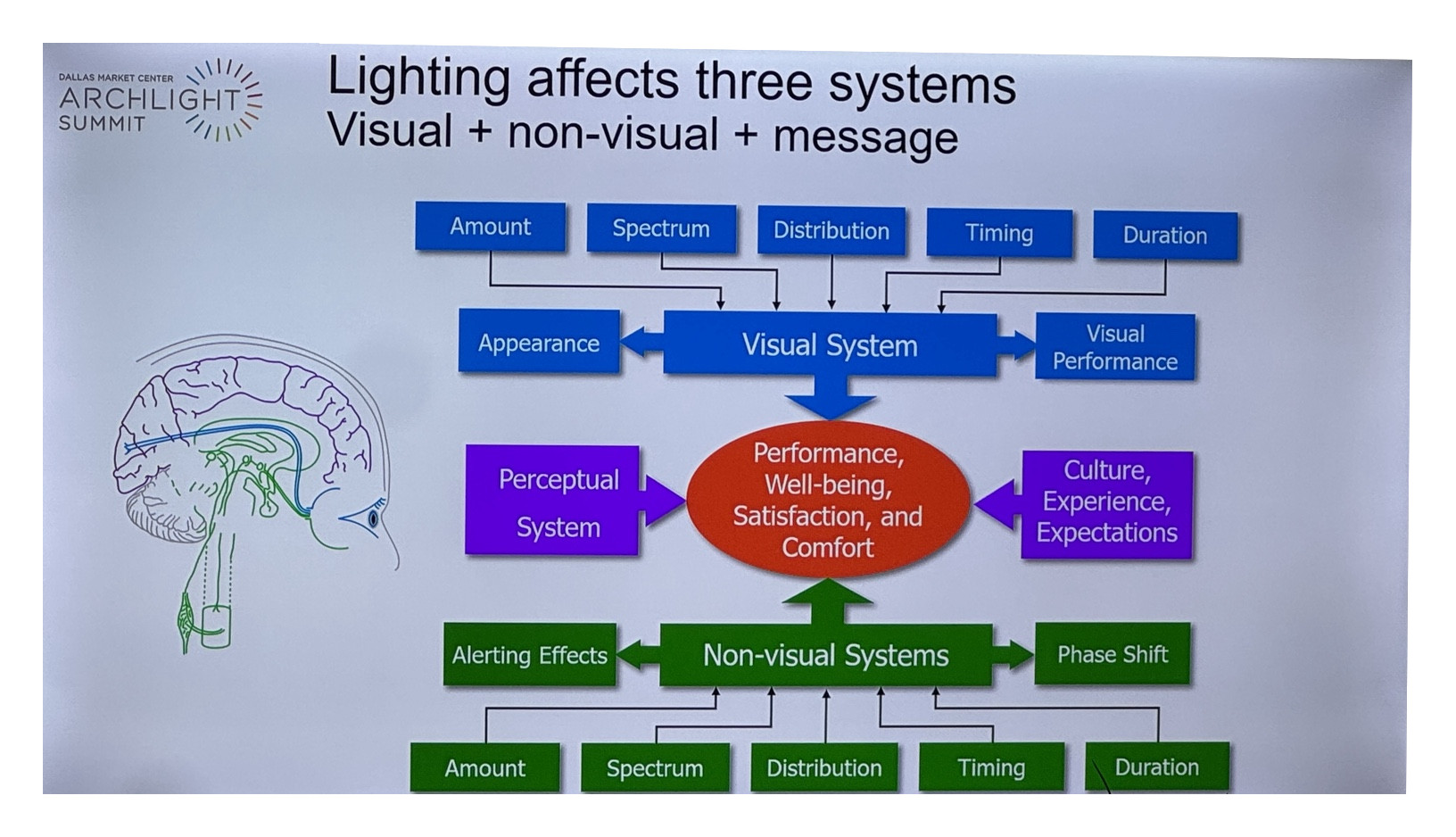
Figueiro divided the effects of light into several categories. The visual system handles basic tasks such as reading and recognizing contrast. The perceptual system helps people understand space, orientation, and environmental cues. Then there are the non-visual effects, including circadian entrainment and acute alerting responses.
She emphasized that light also sends messages. A brightly illuminated business suggests it is open. A window can communicate status or connection to the outdoors. Lighting can even influence how safely someone moves through a space.
That last point has become an important part of Figueiro’s research. Her team has studied horizontal and vertical nighttime lighting cues in nursing homes and assisted-living environments. Those cues help occupants orient themselves after getting out of bed.
In one study, the lighting intervention was associated with about a 34% reduction in fall rates. Figueiro described one installation where the lighting cues unintentionally led residents toward a closet rather than a bathroom. The lesson was striking: light was not simply helping them see. It was actively guiding movement.
Bright Days, Dim Evenings, Dark Nights
Figueiro returned repeatedly to one practical principle: Bright days. Dim evenings. Dark nights.
The human circadian system runs on a cycle that is slightly longer than 24 hours, so it needs daily environmental signals to remain synchronized with local time. Light is the primary synchronizer.
Morning and daytime light help keep the biological clock aligned. Too little light during the day, or too much light at night, can contribute to circadian disruption.
Figueiro said designers do not necessarily need to abandon familiar metrics such as lux or footcandles. For many applications, conventional measurements can still be useful if designers focus on where the light is measured.
The important distinction is vertical illuminance at the eye, not simply horizontal illuminance on a workplane.
Figueiro suggested that roughly 350 to 500 lux at the eye during the day can often provide meaningful circadian stimulation, while evening levels should drop significantly, perhaps to approximately 30 to 50 lux at the eye.
It Does Not Have to Be Blue
One of Figueiro’s strongest points concerned the widespread assumption that circadian-effective lighting must be very cool or “blue-enriched.”
She rejected that simplification. “It does not have to be 5000K,” she explained. Circadian-effective lighting can be created with 3000K sources if the light level and delivery are appropriate.
The biological response involves multiple photoreceptors, including rods, cones, and intrinsically photosensitive retinal ganglion cells. Melanopsin matters, but it is not the entire story. For designers, that means spectrum matters, but so do intensity, timing, duration, and direction.
Figueiro also stressed that CCT alone is not enough. Two sources can both be labeled 3000K and still have very different spectral power distributions. She encouraged designers to request spectral power distribution, or SPD, data from manufacturers.
Bring the Light Closer to the Eye
Another practical recommendation was to stop assuming that all useful light must come from the ceiling. Portable luminaires, luminous partitions, indirect systems, and larger diffuse sources can place useful light closer to the eyes without necessarily increasing overall energy use or glare.
Figueiro cited a simple example from neurodegenerative-disease research: paper lantern-style luminaires with 3000K LED lamps positioned near where people spent their mornings.
The solution was not technologically complicated. It worked because the light was delivered where and when it was needed. She also described illuminated tables used in memory-care settings. Residents spent much of their day seated around tables looking downward, so the research team delivered light from the table itself.
Some observers initially complained that the tables were too bright. The residents, however, “flocked to that light,” Figueiro said.
Better Daytime Light, Better Sleep
Figueiro presented several studies supporting the relationship between daytime light exposure, sleep, and mood.
During the COVID-19 shutdown, her team studied people working from home. Many were spending their days in basements, spare rooms, or other dim environments.
The results showed a clear pattern. As daytime light exposure increased, and as people spent more time outdoors, sleep-related impairment and nighttime sleep disturbances decreased.
Mood improved as well. Greater daytime light exposure was associated with less anxiety, less depression, and more positive affect. In another study involving electrochromic glazing, participants received more useful daylight while experiencing less glare and therefore had less reason to close shades. Figueiro reported improvements in sleep and sleep regularity compared with conventional glazing and shades.
Light Therapy Shows Promise for 9/11 Rescue and Recovery Workers
 Light Therapy Shows Promise for 9/11 Rescue and Recovery Workers
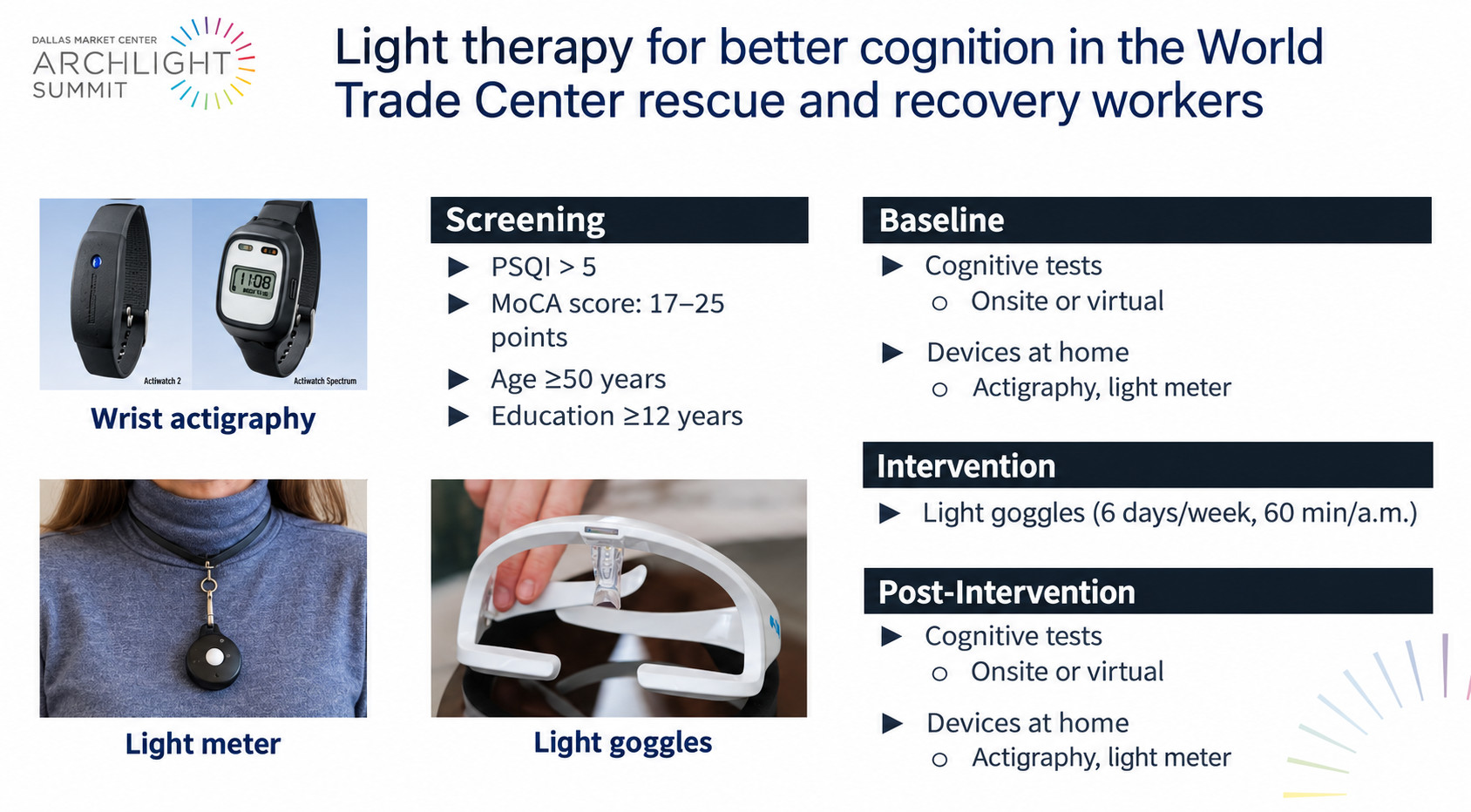
Figueiro also highlighted work with World Trade Center rescue and recovery workers, a population in which Mount Sinai has documented ongoing concerns related to sleep and cognition. In the study she presented, participants were screened for sleep disturbance and mild cognitive impairment, then completed baseline cognitive testing while wearing actigraphy and light-monitoring devices at home.
The intervention used light goggles for 60 minutes in the morning, six days per week. After the intervention, the researchers repeated the cognitive testing and monitoring. Figueiro said the lighting intervention produced significant improvements in reaction time and cognitive performance, adding another real-world example of how carefully timed light exposure may support more than just sleep.
Lighting for Alzheimer’s and Cognitive Health
Some of Figueiro’s most compelling work involves people with neurodegenerative disease. In nursing-home studies involving people with advanced dementia, a six-month lighting intervention was associated with reductions in sleep disturbances, depression, and agitation.
That result is especially notable because six months can represent substantial disease progression in Alzheimer’s patients.
Figueiro emphasized that successful interventions cannot depend on asking residents to sit in front of a light box every morning. The lighting must become part of the architecture and daily environment. Her research has also examined people with mild cognitive impairment living at home. In that less controlled environment, participants wore light meters so researchers could measure actual exposure.
Figueiro reported improvements in cognitive and memory-related measures during the lighting intervention.
Red Light as a “Cup of Coffee”
Figueiro also discussed one of the more surprising areas of her research: saturated red light and alertness. She compared the acute alerting effect of light to a cup of coffee.
Unlike caffeine, however, the effect can disappear relatively quickly after the light is removed. Her team has studied saturated red light around 649 nanometers and found that it can increase alertness without necessarily producing the same circadian effects associated with shorter-wavelength light.
That has important implications for night-shift workers. Figueiro described studies involving nurses who need to remain alert at night without receiving excessive bright light that could suppress melatonin and further disrupt circadian rhythms.
Red light improved reaction time in those environments.
She also suggested that intermittent exposure may work better than continuous exposure because the alerting response appears to decline as people adapt.
A Practical Challenge to Designers
Figueiro’s closing message was directed squarely at practitioners. She rejected the idea that designers should wait for perfect research before applying what is already known.
The built environment affects people whether designers intervene or not. Lighting is already influencing occupants every day, along with temperature, noise, humidity, and other environmental factors. Her recommendation was not to overcomplicate the problem. Deliver brighter light during the day. Reduce it in the evening. Preserve darkness at night. Measure light at the eye. Ask manufacturers for SPD data. Use diffuse sources and reflected light to control glare. Bring light closer to occupants when that makes sense.
And perhaps most importantly, remember that darkness is part of lighting design too.
For an industry that often focuses on what happens when the lights turn on, Figueiro’s ArchLIGHT Summit presentation was an important reminder that the full 24-hour cycle matters.